

Forehead Wrinkles: Can You Really Smooth Them Without Injections? A Dermatologist Weighs In
They are often the first lines to appear — and the last to fade. Horizontal forehead wrinkles affect the vast majority of women from their mid-thirties onwards and rank among the top reasons for booking an aesthetic consultation. Yet Botox is far from the only option. Advances in biomimetic peptide research are opening a gentler, increasingly well-documented alternative. Dr Nicolas Gervais, a Paris-based dermatologist specialising in anti-ageing aesthetic medicine and a former hospital consultant, explains what the science now says.
Perhaps you first noticed them during a video call one morning — those horizontal lines, clearly visible on screen, that you did not recall seeing a few months earlier. Or maybe it happened while brushing your hair back in front of the mirror, a simple gesture that suddenly revealed a forehead etched with fine grooves.
Forehead wrinkles have a peculiar quality: they are impossible to ignore. Situated in what dermatologists call the “communication zone” of the face, they are among the first lines people notice when looking at you — and among the hardest to disguise, even with make-up.
“Foundation settles into the creases and actually draws more attention to them rather than concealing them. The forehead is a large, mobile surface: every micro-expression causes the coverage to crack,” observes Dr Nicolas Gervais, a dermatologist based in Paris. “That is precisely why I see patients about this concern quite literally every single day.”
Why do forehead wrinkles appear first?
To understand how to treat them, you first need to understand what makes them so persistent. And the answer comes down to one word: the frontalis muscle.
“The frontalis muscle is unique on the human face. It is the only muscle that covers such a large area while being engaged almost constantly,” explains Dr Gervais. “Every time you raise your eyebrows, express surprise, concentration or concern, it contracts. It is estimated to contract between 10,000 and 15,000 times a day.”
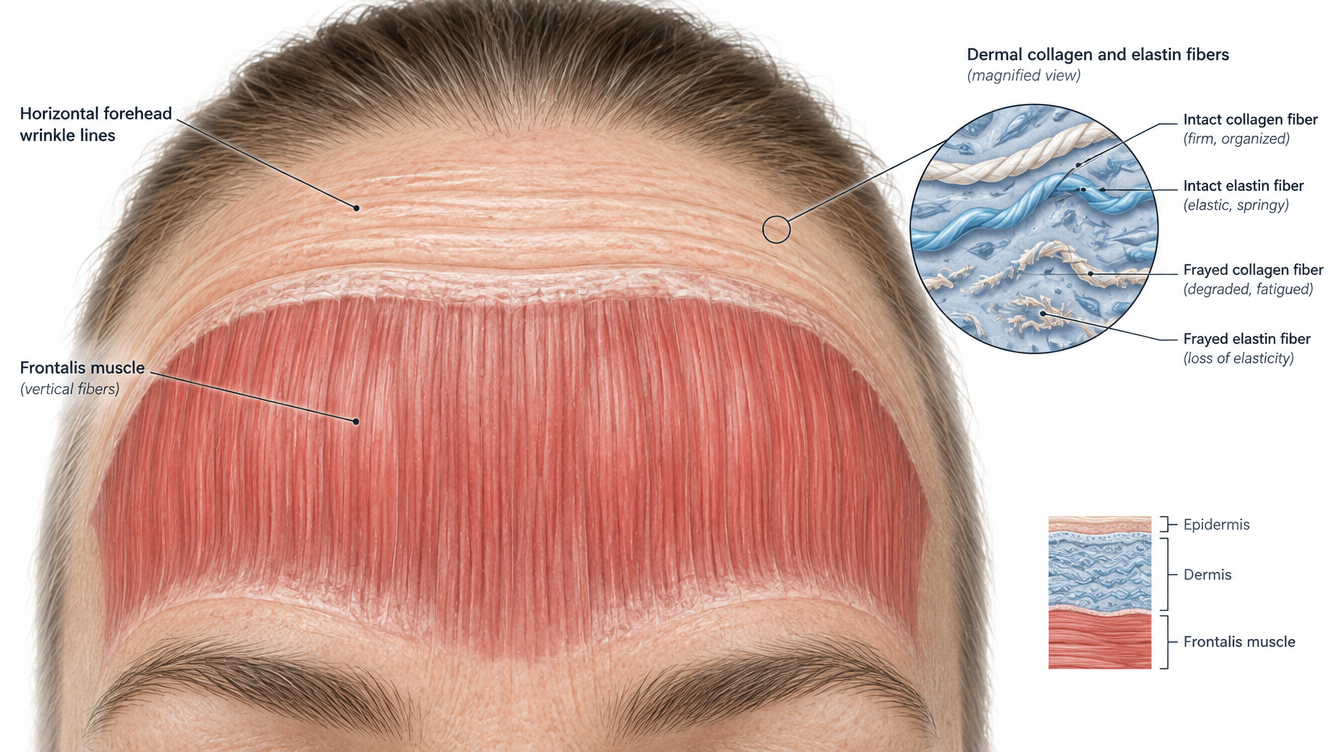
That figure is remarkable. With every contraction, the skin folds along the same horizontal axis. For years, collagen and elastin allow the skin to spring back to its original shape. But this recovery mechanism gradually wears out.
Three factors explain why the forehead is affected first:
1. Constant micro-contractions. Unlike crow’s feet, which only appear when you smile, forehead wrinkles form during micro-expressions that are often unconscious: concentrating at a screen, squinting slightly in sunlight, everyday stress. Research published in Aesthetic Plastic Surgery (2025) showed that the frontalis muscle exhibits a unique contraction pattern, with a resistance gradient that creates preferential folds in the same zones time and again.
2. Structurally thinner skin. The skin on the forehead is among the thinnest on the face, with a dermis significantly less thick than that of the cheeks or chin. High-frequency ultrasound measurements across 180 subjects confirm this: the frontal dermis measures just 1.15 mm in women, compared to 1.56 mm on the cheeks — more than a quarter less structural support. The dermis is where collagen fibres reside, providing the skin’s mechanical resistance. “Less dermis means less structural reserve. The forehead absorbs micro-contractions without a safety net,” our expert explains.
3. Cumulative sun exposure. The forehead is the area most exposed to UV rays on a daily basis, receiving the most direct radiation. Actinic damage accelerates the breakdown of both collagen and elastin, a phenomenon dermatologists call photoageing. The result: wrinkles appear earlier and run deeper.
“What makes forehead wrinkles so frustrating is this combination: a hyperactive muscle, thin skin and maximum sun exposure. The three factors reinforce one another,” Dr Gervais summarises.
The wrinkles that transform your face
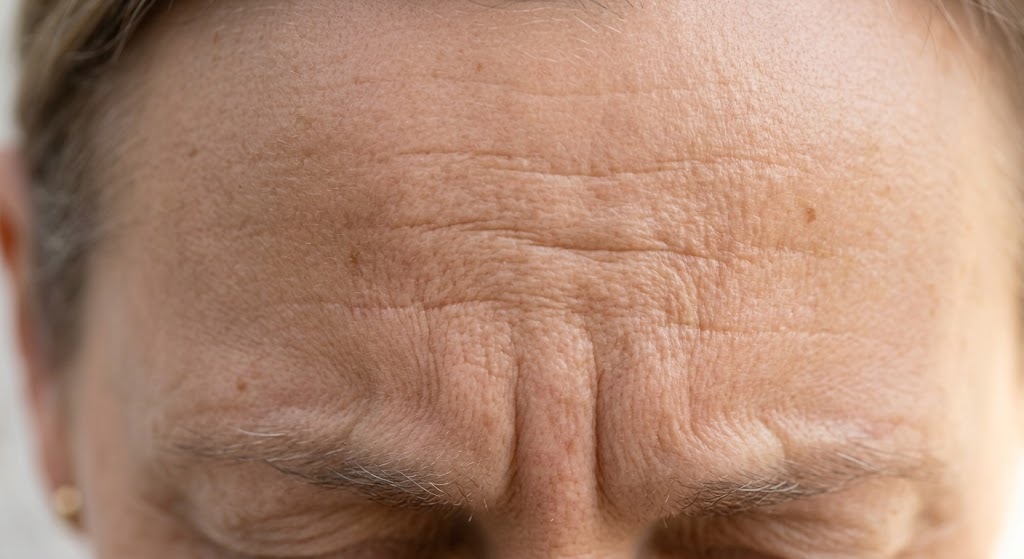
Beyond aesthetics, forehead wrinkles have a measurable impact on perceived age. In a study published in Clinical, Cosmetic and Investigational Dermatology, involving 400 faces evaluated by 126 observers, wrinkles in the upper third of the face were among the ageing markers most strongly correlated with perceived age. More than 80% of evaluators identified them as one of the most important factors in their estimation of a person’s age.
“A 42-year-old woman with pronounced forehead wrinkles can easily be perceived as 48 or 50,” notes Dr Gervais. “It is unfair, because these lines do not reflect a lack of care — they reflect years of expressiveness. But other people do not make that distinction.”
What is more, forehead wrinkles are among the few facial lines that make-up can actually worsen. Unlike dark circles or small imperfections, which respond well to cosmetic correction, horizontal forehead lines absorb and accumulate foundation pigment. Setting powder, meanwhile, accentuates the depth of the creases. “My patients often tell me: the more I try to hide them, the more visible they become,” our expert notes.
Botox: effective, but at what cost?
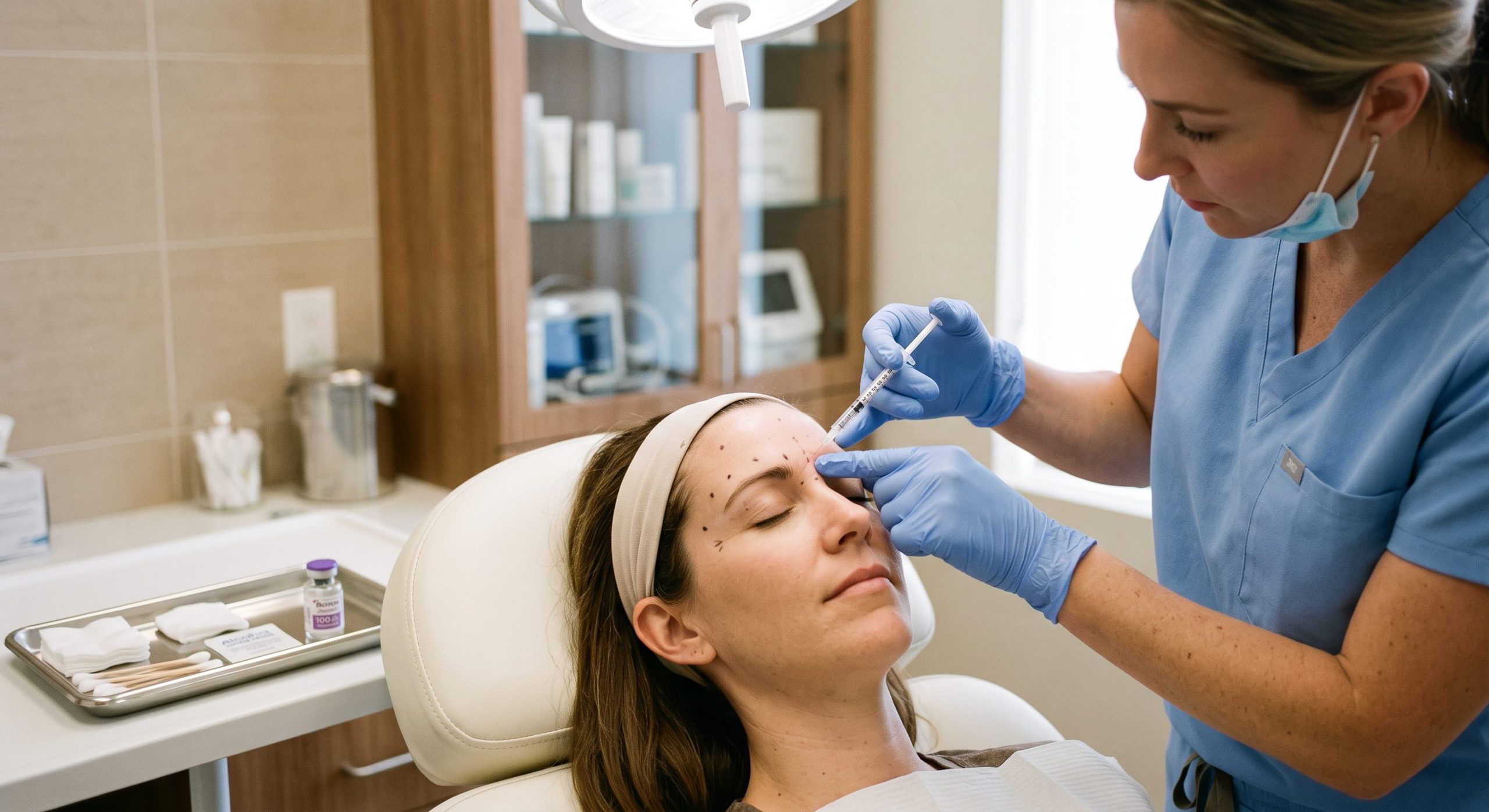
Let us be straightforward: botulinum toxin remains, as of today, the fastest way to smooth forehead wrinkles. By blocking nerve transmission at the neuromuscular junction, Botox prevents the frontalis muscle from contracting. Results are visible within days and can reduce wrinkle depth by up to 80%.
But that efficacy comes at a price — and not only a financial one.
“You have to distinguish between efficacy and overall suitability,” says Dr Gervais. “Botox works — nobody disputes that. But it has real limitations that every patient should understand before taking the step.”
Limited duration. The effects wear off in three to six months. That means at least two sessions a year to maintain results, and consistency is essential — abruptly stopping can produce an uncomfortable rebound effect.
Risk of diffusion. The toxin can migrate to neighbouring muscles, causing ptosis (a drooping eyelid) or asymmetry of the brows. These effects are temporary but can persist for several weeks or longer.
The “frozen forehead.” This is patients’ number-one fear. Too high a dose or a poorly placed injection reduces the natural mobility of the forehead, producing that frozen look — smooth, but lifeless — that is immediately recognisable.
Cumulative cost. Across Europe, a single Botox session for the forehead typically costs between €200 and €500. Over ten years, at two sessions annually, the bill runs to between €4,000 and €10,000 — before top-up treatments.
According to a pan-European consumer survey (2024), 67% of women aged 35 to 55 describe forehead wrinkles as their primary skin-ageing concern — a score higher than for crow’s feet (51%) or nasolabial folds (43%).
“More and more patients are asking me: is there something that genuinely works, without injections? Five years ago, I would have struggled to answer with conviction. Today, biomimetic peptide research has changed the picture,” says Dr Gervais.
The three mechanisms to target for lasting forehead wrinkle reduction
Recent dermatological research has shed light on why some anti-wrinkle treatments work — and why the majority disappoint. For the forehead in particular, it is not enough to hydrate or “plump”: you need to act on three distinct levels, according to Dr Gervais.
1. Relax the muscle — without paralysing it
This is the principle behind Botox, but the question is: can a similar effect be achieved topically?
The answer came from an unexpected source: the venom of the temple viper (Tropidolaemus wagleri), a snake native to South-East Asia. Researchers identified a peptide in this venom, waglerin-1, that naturally blocks acetylcholine receptors at the neuromuscular junction — the same mechanism as botulinum toxin, without the potentially harmful effects.
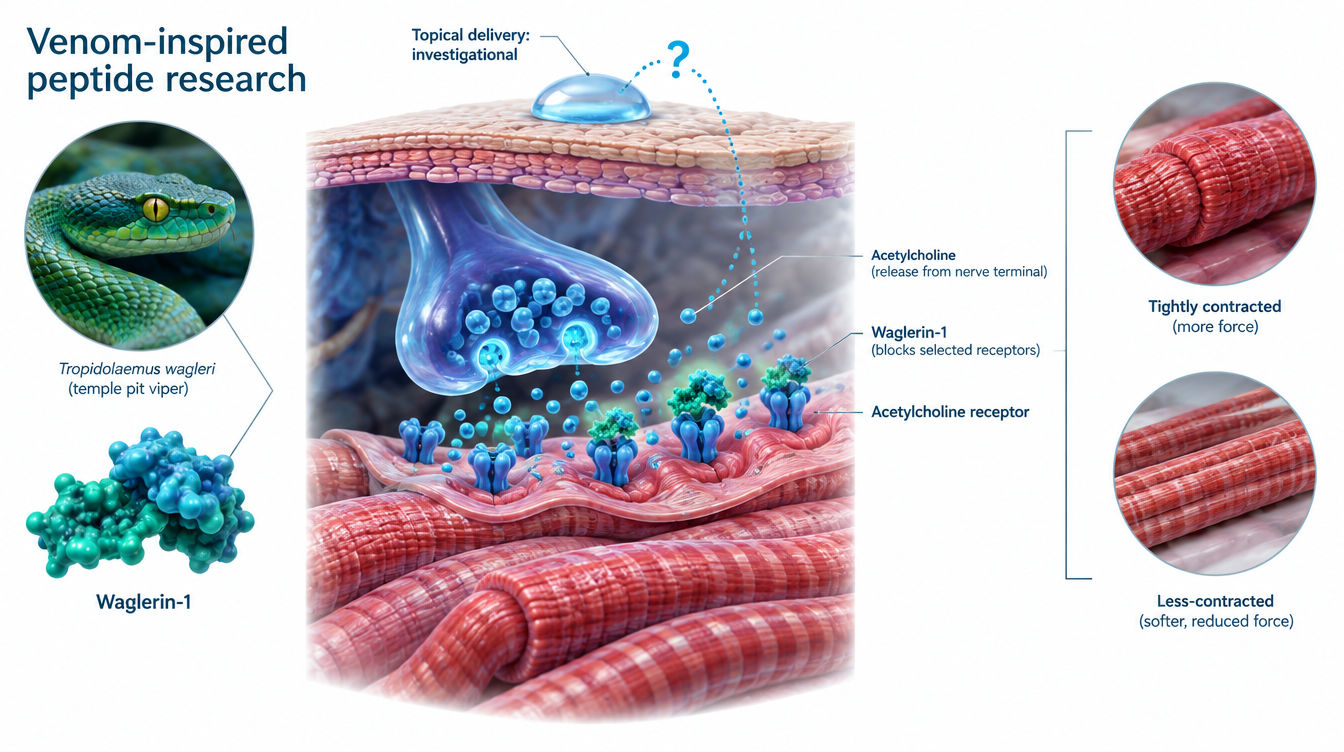
By synthesising this peptide, the Swiss laboratory DSM developed SYN®-AKE, a biomimetic tripeptide that reproduces this muscle-relaxing action when applied topically.
“SYN-AKE acts on the nicotinic acetylcholine receptors: it prevents the contraction signal from reaching the muscle, exactly like Botox, but in a reversible, gradual way — and without injections,” our expert explains.
The clinical data speak for themselves. In a placebo-controlled study involving 100 volunteers, a formula containing 4% SYN-AKE applied twice daily reduced wrinkle size by 52% in 28 days. The first visible results appeared within the first week.
By comparison, a trial on 45 volunteers showed that SYN-AKE at 4% markedly outperformed Argireline at 10% — another popular anti-wrinkle peptide — with a 21% reduction in skin roughness versus just 4% for Argireline.
2. Rebuild the collagen matrix at depth
Relaxing the muscle is essential, but insufficient on its own. Forehead wrinkles are also the product of progressive collagen loss in the dermis. By the age of 40, collagen reserves have already declined by around 25%, and continue to fall by approximately 1% per year.
Matrixyl® 3000, a patented dipeptide composed of palmitoyl-tripeptide-1 and palmitoyl-tetrapeptide-7, is today one of the best-documented actives in this field.
It sends repair signals to fibroblasts — the dermal cells responsible for collagen production. An in vitro study conducted at the University of Reading demonstrated that this peptide doubled collagen production. In clinical conditions, across 23 volunteers aged 42 to 67 using the product twice daily for two months, the researchers measured a reduction in perceived age of 5.5 years.
“Peptides like Matrixyl do not merely stimulate type I collagen. They also activate production of type III — the collagen that gives skin its elastic recovery. In practical terms, for the forehead this means that between each contraction of the frontalis muscle, the skin snaps back more effectively: the crease reforms less deeply with every cycle, and the wrinkle becomes visibly less pronounced over the weeks. Allow six to eight weeks to observe this structural change,” Dr Gervais explains.
3. Restore dermal density — the often-overlooked factor
Relax the muscle, rebuild collagen… and then what? There remains a parameter that many treatments ignore: the density of the dermis itself. With age, the dermis does not only lose its collagen fibres — it also loses substance. Glycosaminoglycans (GAGs), the macromolecules that retain water in the dermal tissue and give it volume, gradually diminish. The result: the skin loses its internal support, and wrinkles settle into increasingly fragile terrain.
“Imagine a mattress from which some of the filling has been removed: even if the fabric on the surface is intact, it sags. That is precisely what happens in a dermis that has lost density. The wrinkles are no longer just folds — they become structural hollows,” illustrates Dr Gervais.
Two approaches stand out today for targeting this dimension. Pro-Xylane (hydroxypropyl tetrahydropyrantriol), a sugar derived from beech wood developed by French research, stimulates GAG synthesis in the dermis and features in certain La Roche-Posay formulations. It is a well-documented active, though its effects on density remain gradual.
More recently, another approach has emerged: certain bioactive peptide complexes target the renewal of the extracellular matrix directly. The most advanced trials — double-blind, in women aged 60 to 75 — have measured dermal density gains of over 40% in less than two months using high-frequency ultrasound (see the product ranked number one below). A level of evidence still rare for a cosmetic active.
“Dermal density is the most underestimated factor in treating forehead wrinkles. You can relax the muscle and relaunch collagen, but if the dermis has lost its firmness, the skin keeps folding into the same grooves. That is why I always check whether a treatment acts at this level too,” our expert continues.
Biomimetic peptides such as SYN-AKE have been rated “risk 1 out of 10” by the Environmental Working Group (EWG) — the lowest possible level. No cytotoxic or mutagenic effects have been observed at cosmetic concentrations, making them an option with a very favourable safety profile.
What to look for in an effective forehead anti-wrinkle treatment

Based on these three mechanisms, Dr Gervais identifies four criteria he systematically checks before recommending a treatment that targets forehead wrinkles.
A clinically validated muscle-relaxing active. “This is the number-one criterion for forehead wrinkles, because it is what sets them apart from other types of wrinkle: they have a strong muscular component. A treatment that does not address it is only tackling half the problem,” our expert insists. SYN-AKE is currently the most thoroughly documented topical active in this category, with a 52% reduction in wrinkle depth in 28 days.
Peptides that rebuild the dermal matrix. Matrixyl® 3000 and matrikine-type peptides have demonstrated their ability to relaunch the production of both collagen and elastin — the two structural proteins whose loss is directly responsible for wrinkle fixation.
An active targeting dermal density. Beyond collagen, overall dermal density — particularly glycosaminoglycans — determines the skin’s ability to resist creasing. A treatment that includes a densifying active, whether Pro-Xylane or specific peptide technologies, provides structural support that reinforces the first two mechanisms.
Measurable clinical validation. “I rely on studies with objective measurements: wrinkle-depth reduction measured by 3D profilometry, DermoScan analysis, collagen-fibre counts — not just self-assessments,” Dr Gervais adds.
Our pick: 3 dermatologist-recommended forehead anti-wrinkle treatments
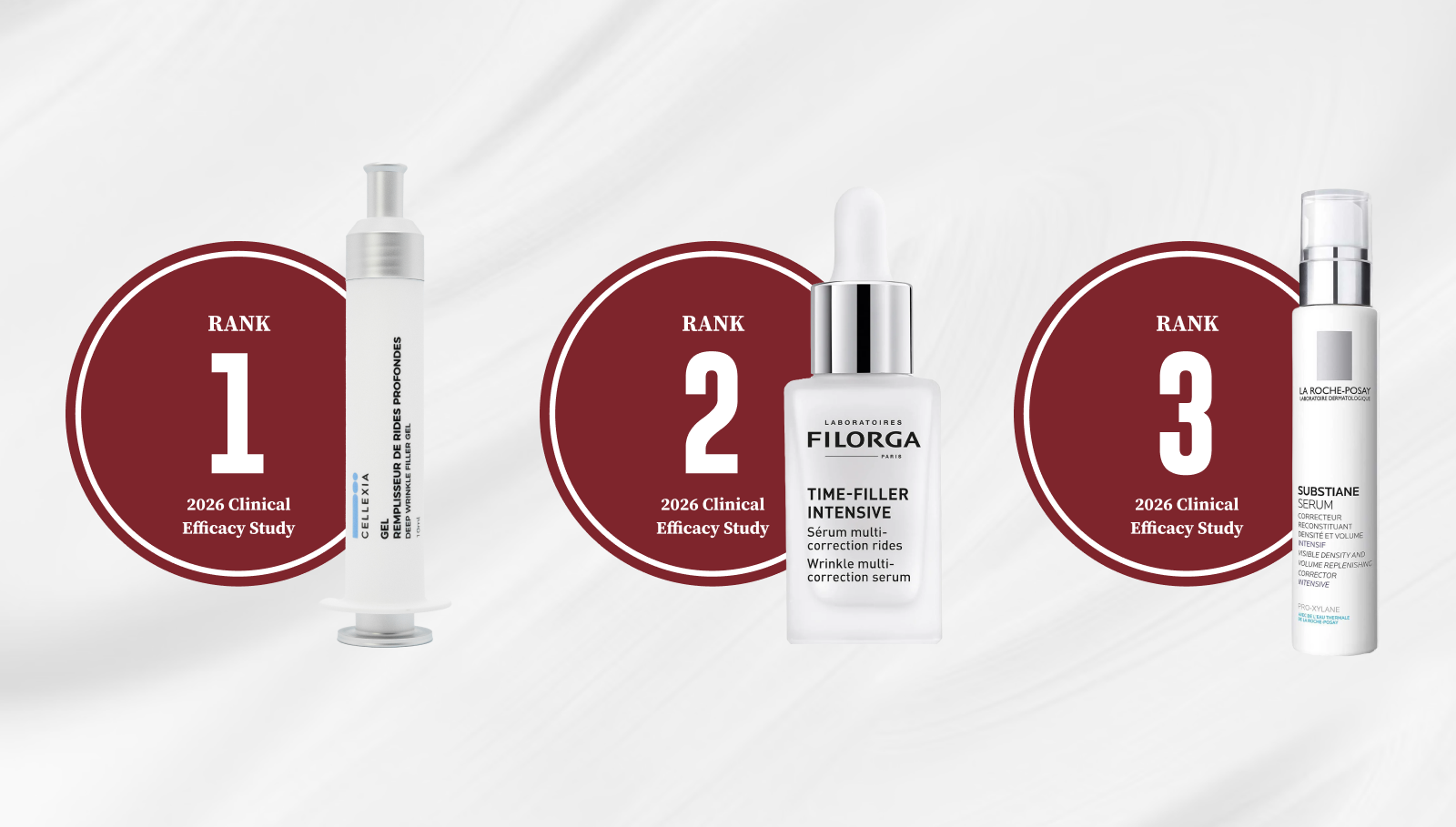
Because choosing a targeted forehead treatment can feel overwhelming given the sheer number of products on the market, we asked Dr Gervais and a panel of dermatologists to help identify the most accomplished formulas. Here is their selection, ranked by overall performance.
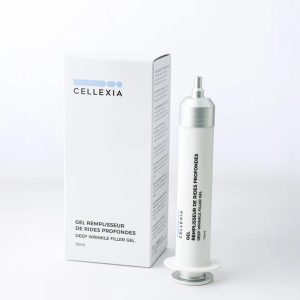
The concept
This is the only formula in our selection to target all three forehead-wrinkle mechanisms simultaneously, with a design grounded in the work of Nobel Prize laureate Elizabeth Blackburn on cellular ageing (2009). Its lead active, SYN®-AKE — the biomimetic peptide detailed above — blocks the contraction signal of the frontalis muscle, the one that carves horizontal furrows across the forehead up to 15,000 times a day. Matrixyl® 3000, a dipeptide capable of doubling collagen production, rebuilds the structural matrix of a frontal dermis measuring just 1.15 mm. Wonderage™ acts on the third lever: this peptide complex stimulates extracellular matrix renewal to restore dermal density — the internal “cushioning” whose loss turns temporary folds into permanent creases. Grant-X, an elastomer polymer, forms a smoothing film on the skin’s surface from the moment of application, delivering an immediate corrective effect.
Cellexia ships directly from their European distribution centre, with fast delivery across the continent — typically two to four business days to most EU countries, and express options available for next-day delivery in selected markets.
Clinical results
- SYN®-AKE (muscle relaxant): 52% reduction in wrinkle size in 28 days (randomised, placebo-controlled study, 100 volunteers) — on the forehead, visibly shallower furrows within the first few weeks.
- Matrixyl® 3000 (matrix rebuilder): doubles collagen production in vitro and delivers a reduction in perceived age of 5.5 years after two months of twice-daily use (23 volunteers, aged 42–67).
- Wonderage™ (densifier): +46% dermal density in 56 days (double-blind, 44 women, aged 60–75). Skin hydration increases by 46% in 28 days (23 volunteers).
- Grant-X (instant smoothing): mechanical surface smoothing from the first application, with a temporary corrective effect visible within minutes.
“The combination of SYN-AKE and Matrixyl addresses both the muscular cause and the structural loss, which is consistent with what we know about the mechanics of forehead wrinkles. The Wonderage adds an interesting densifying effect. There is no major antioxidant in the formula, which is a point to compensate for with an antioxidant serum alongside it. But the multi-target approach is solid,” analyses Dr Gervais.
- The only formula combining a muscle relaxant, a peptide matrix rebuilder and a densifying active
- Formulation grounded in Elizabeth Blackburn’s Nobel Prize-winning research
- Used in over 100 aesthetic clinics
- Winner of the European Cosmetics Award 2026
- Hypoallergenic and non-comedogenic
- Fast shipping across Europe — express delivery available to most EU countries
- Available exclusively through the official website, not stocked in pharmacies
- Produced in limited batches — availability can vary
Price: approx. €57
Check Product Availability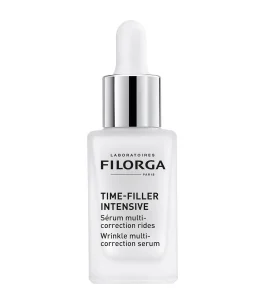
The concept
French laboratory Filorga built its reputation on the concept of “meso-cosmetics” — skincare inspired by the mesotherapy protocols used in clinics. The Time-Filler Intensive combines a multi-peptide complex (including an Argireline derivative, a hexapeptide muscle relaxant) with hyaluronic acid of varying molecular weights and their proprietary NCEF (New Cellular Encapsulated Factors) complex, which blends 50 ingredients inspired by mesotherapy cocktails. The aim is to address both expression lines and established wrinkles in a single step.
Results
According to the brand’s data, 92% of users report smoother skin and 85% observe a reduction in wrinkles after one month of use. The gel texture delivers a pleasant “second skin” effect from the first application. Tolerance is good, including on sensitive skin.
“Filorga is a serious house and the Time-Filler is a well-formulated product. However, Argireline, which is the muscle-relaxing peptide in this formula, delivers significantly less muscular relaxation than SYN-AKE: direct comparative studies show a skin-roughness reduction of 4% for Argireline versus 21% for SYN-AKE at comparable concentrations. Furthermore, the NCEF complex blends numerous actives at necessarily low individual doses. The intention is good, but the concentration of each individual active remains an open question,” Dr Gervais notes.
- Immediate “second skin” smoothing effect
- Established European brand with a strong pharmacy presence
- Argireline is markedly less potent than SYN-AKE for muscle relaxation (4% vs 21% roughness reduction)
- The NCEF complex dilutes its actives to individually undisclosed concentrations
Price: approx. €55. Available in pharmacies across Europe and on filorga.com.
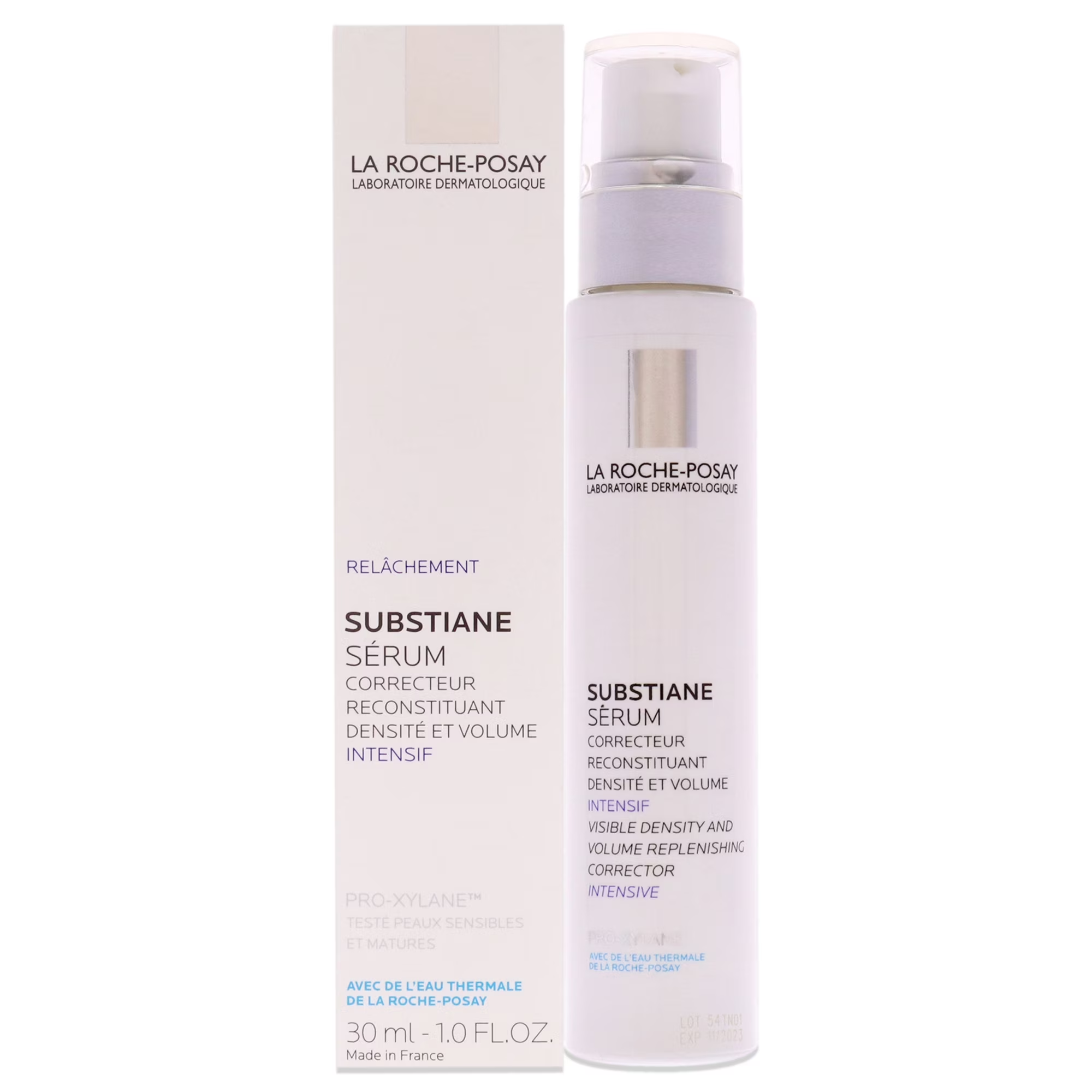
The concept
La Roche-Posay’s approach here centres on Pro-Xylane, a patented active derived from beech wood, developed by L’Oréal research and designed to stimulate the synthesis of glycosaminoglycans (GAGs) in the dermis — the molecules responsible for maintaining skin density and volume. The Substiane [+] Serum pairs it with linactyl, an essential fatty acid that reinforces cell cohesion, and adenosine, a recognised activator of collagen production. The approach is firmly oriented towards restoring the skin’s deep structure.
Results
Pro-Xylane has been the subject of several scientific publications validating its ability to stimulate GAG production in vitro and to improve skin firmness in vivo. According to the brand’s data, users observe firmer, denser skin after four weeks of regular use. Tolerance is a long-standing strength of La Roche-Posay: formulas tested under dermatological supervision, enriched with soothing thermal spring water, and suitable for sensitive and reactive skin.
“La Roche-Posay have done serious work on Pro-Xylane, and the approach through dermal density is relevant — it is an aspect of skin ageing that many brands overlook. But one must be transparent: this formula does not contain a muscle-relaxing peptide. For forehead wrinkles specifically, the muscular component is the primary driver of the problem, and without action on this dimension, the treatment addresses structure but not the cause. The timeline for results is also longer than that of a targeted peptide formula,” Dr Gervais tempers.
- Patented Pro-Xylane targeting dermal density
- Excellent tolerance, even on reactive skin
- Widely available in pharmacies and drugstores across Europe
- No muscle-relaxing peptide — does not address the muscular component of forehead wrinkles
- Results on established expression lines are slower and more gradual
Price: approx. €42. Available in pharmacies across Europe and on laroche-posay.com.
The expert’s final word
“Forehead wrinkles are not inevitable, and the alternative to injections exists today. The key is choosing a treatment that acts on all three dimensions of the problem: muscle contraction, collagen reconstruction and dermal density. Be consistent — apply your treatment morning and evening for at least four weeks before judging the results. And do not forget your SPF 50 sunscreen: the forehead is the most UV-exposed area of the face, and without protection, even the best treatment is working against the tide.”
So if you too are concerned about those lines on your forehead, you now know the solutions — and the criteria — for making the right choice.